Tuesday, June 20, 2006

break


will be taking a much longer break..until then, cheers!!!


Many, many thanks to our friends..still it was uphill task and hopefully things will get back again..many thanks to my dearest friends..cheers

Wednesday, May 10, 2006

daydream

A daydream is a form of consciousness that involves a low level of conscious activity. Daydreaming generally comprises of a fantasy while awake.


Sometimes, someone who daydreams is seeking to fulfill a dream or hope in their mind. While it may seem a useless human behavioral glitch or fault, it can actually be quite constructive, especially for those who are in a creative career.

Often, the daydream takes the form of a train of thought, leading the daydreamer away from being aware of his or her immediate surroundings, and concentrating more and more on these new directions of thought. To an observer, they may appear to be affecting a thousand yard stare. A sudden stimulus may startle them out of the daydream.

When we are young, we often daydream that one day when we grew up, we could do the things we wanted to. We yearned to grow up as we often heard our father and mothers, "Wait until you grow up".

However when the days came, we understood that there are so many things we wanted to do, but could not do. Our hands are tied and resources are limited.

so, we are stuck and of course, another best things to do was to daydream again..thinking of the best things in our lifes and others as well

Tuesday, May 09, 2006

How do you spend your days? What do you do?


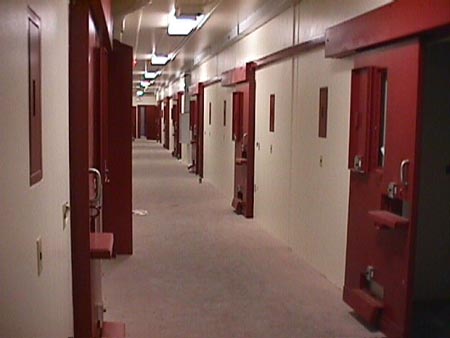
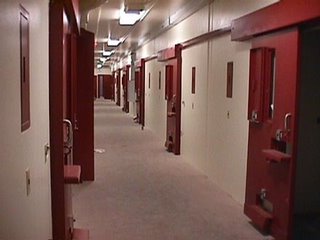
Most Secure Prison
In Supermax prisons, prisoners are generally allowed out of their cells for only an hour a day; often they are kept in solitary confinement. They receive their meals through "food ports" in the doors of their cells. Prisoners are given no work and very little access to leisure activities, though some categories of prisoner are allowed to have a television. When Supermax inmates are allowed to exercise, this may take place in a small, enclosed area where the prisoner will exercise alone. Prisoners are under constant surveillance, usually with closed-circuit television cameras. Cell doors are usually opaque, while the cells may be windowless. Conditions are spartan, with poured concrete or metal furniture common. Cell walls, and sometimes plumbing, are often soundproofed to prevent communication between the inmates


A survey was done to find out their daily routine:-


"I usually spend my days reading and trying to stay focused upon keeping my sanity."

"Writing ten letters a week, reading one book a week, watching CNN News for two hours a day, trying to keep cool from the heat using a wash cloth, drinking lots of water, and fanning with a note pad. Trying to find the right time to sleep and trying to control my anger from not getting out of control and letting this psychological torture drive me insane."


"There isn't much to do. When I get my three books on Friday I begin to read them and by Saturday night I'm done with all three and have to wait until next Friday. Other than that I keep myself busy by writing my family and keep my wits."

"I spend my day making things to do. I read, write and talk to voices in the vent that belong to faces of other inmates I can't interact with."

"In order to stimulate myself I read, exercise or write a letter. There's a television in my cell that has the Discovery Channel, History Channel, Sky Angel (religion) Channel, PBS and CNN programmed into it. So I watch the TV. It all gets boring and monotonous though. I would rather be active working or something than sitting in a cell doing the same things over and over."


"I spend my days trying to do what's possible to better myself educationally, which right now I'm taking a course in math and writing skills."


"I eat, sleep, use the toilet, and every other human thing, under the ever-watching camera! I work out six times a week. I read lots of books. I am trying to get well versed in the law so I can sue the DOC all the time, but also to try and help illiterate and slow inmates with appealing their state-given sentences."

"I draw, read, write poetry, letters, fiction, pace my cell, sit back and listen to what these people are saying, just lay in bed and think about everything in life about what's going on in here and out there."

"I spend my days thinking, studying, writing and exercising. Due to the unfortunate circumstances this is all an individual can basically to besides eat and sleep. Basically I do what it takes to keep a positive attitude and to stay focused."

"Depressed, I make attempts to contact coalitions but no one seems concerned or cares. I've thought about suicide."

"I sleep a lot, and when I'm awake, I read or pace. Lately I've been daydreaming a lot. Most of the time I don't know the day, time or date."

Walking in cell. Try to read but it is very difficult to have the mind set for reading. Try to sleep. Try to watch TV (Discovery, PBS, CNN, History). Try to get my mind into writing letters to organizations about my situation in SMCI. Try to work out when my body no longer hurts. Time is difficult when one is suffering from sensory and sleep deprivation."


"I sit in my room trying to remain sane. I don't do anything but sit in my cell and stare at the walls and try not to have a breakdown."

"I sleep and daydream -- there is not much to do."


"Most days I do a lot of reading and writing to friends and family. I try to study the law and understand it the best I can. I also draw on days when I feel like expressing myself. Working out is hard to do in a confined space such as this, but I do my best to keep all my muscles functioning properly. That is about all we can do."


"Walk around my room all day, at times read and work on my legal case."
Cherry Blossom


In a year, cherry Blossom blossomed about two weeks and you can see these beautiful flowers blooming on trees.

so, you are extremely fortunate to see the full blossoming as it was difficult to predict the timing..cheers!
.

Monday, May 08, 2006

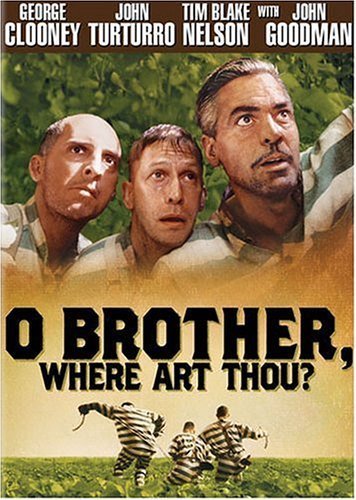
O Brother, Where Art Thou?


Theme:Mississippi, 1937. Three convicts escape from a jail chain-gang intent on getting to the loot stashed away by one of them. As this is at his house soon to be flooded by a new dam, speed is of the essence. They find themselves fast-talking their way out of one jam after another, and along the way not only have to be wary of riverside sirens but even get to make a pretty good country record.

Last few years ago, think I watched the film on local TV programmes on one long weekwends where we were resting at home, and came across this strange title.
Since we did not have anything much to do, we just have a simple thought: if it was not so good, maybe we go out for shopping or other things.

but one hour later, as we watched on, we laughed to our hearts of what we have seen: so funny.
It was one of tv programmmes that we did not thought much but later it turned out to be one of the best we have seen.

A Sad Encounter with a Resident

(Posted on Sammyboy's forum by an anonymous WP volunteer)

I was with Glenda this afternoon doing our house to house visits in Sengkang, which is part of AMK GRC. We were going about the usual thing..climbing stairs, knocking on doors, distributing our party newsletter, etc...

We came across this house which was pretty dark. Since the door was opened, Glenda asked if anyone was home, and saying , "We're from the Workers' Party..." in mandarin.

This man - 50+ - came to the door, bare-bodied. Glenda greeted him and explained what and why we were there. A short time later, the man's wife came to the door as well. She seemed to have been cooking or something.

The moment she heard we were from the Workers' Party, she began to tell us her story. She began to talk about her children. She said, "Now everything has gone up. How am I suppose to take care of my children? They (the PAP) asked us to vote for them the last time but see what has happened? How am I suppose to pay for my house?"

At this point I could see that she was getting very emotional and obviously she had kept these feelings inside for a long time. She continued to explain why she was having such a hard time. Her husband needed to see the doctor but she could hardly afford it and her kids needed to go to school. She had to work and yet put up wioth the rising cost of living.

At this point, her eyes began to turn red and she took off her spectacles to wipe her eyes. After she finished, I could see tears on her face.

It was truly heartwrenching for me to see this - up close and personal govt policies which affect these people.

Her husband then said that his whole family was going to vote for the WP this time. I asked his wife if she knew the Workers' Party. She said, "Of course. Mr Low thia Kiang... and the hammer.."

Throughout this time, Glenda and I just kept silent and listened to her. We could onyl offer words of comfort which does not do much. We then said our goodbyes.

The strange thing is that after we left, Glenda and I kept silent. I didn't ask Glenda about her feelings cos I think she was quite overwhelmed - like me.

This incident has really left a mark on me. I will never forget this

Sunday, May 07, 2006

figures that only looked nice on paper

Tharman Shanmugaratnam's (Minister of Education) response to his calls, during his rallies, to abolish streaming in primary schools. Mr Tharman had said that the practice of streaming has enabled Singapore to maintain a low drop-out rate of 3 per cent, 10 times lower than that in the United States where there is no streaming.

But Mr Chiam (SDA candidate for Potong Pasir) said that these were figures that only looked nice on paper.


"He was using figures which are presentable to the general public. I was a school teacher. I am talking from an educational point of view. When we get a 3 per cent drop-out rate, it looks nice on paper but for those who are streamed … they would have already lost their spirit.
You have condemned them as rejects and failures.


"I think they should study the Russian education system, rather than comparing it to the American education system. The teachers there really care for late developers and slower learners.
They spend more time on them and really bring them up very nicely."


The Facts:

They tell us the 'big lie' that "the figures don't lie", as they treat us as categories and not as individuals. However, category is not truth, but merely an act of choice driven by hidden agendas and prejudged priorities. Categories are intrinsically ambiguous. They can be distorted so that most of the data is 'on message', while awkward numbers are ignored. "Domination is transfigured into administration."

Reduced to statistics, both human problems and problem humans are made anonymous. Brutally insensitive decisions and actions are reduced to bookkeeping. As a paper exercise, otherwise unpleasant acts are purified. Treated as mere statistics, the unemployed, homeless, hospital waiting lists, alcoholics and other drug addicts, the mentally ill are all made invisible.


From their numerical platform, obsessive compulsive neurotic politicians claim to manage the risk and the uncertainty of our society with the arbitrary use of statistical models; with opinion polls, market research, focus groups, socio-economic classifications, performance measures, efficiency audits, cost-benefit analyses.
Through statistics, society becomes well-behaved, tidy, controllable.


...Professor Ian Angell on "single death"

Saturday, May 06, 2006

means test criteria for C class ward


We have heard about means test for C class ward in Singapore Public Hospital for the past few days.

actually what is means test?

From Wikipedia, the free encyclopedia, the term means test refers to an investigative process undertaken to determine whether or not an individual or family is eligible to receive certain types of benefits from the government.

The "test" can consist of quantifying the party's income, or assets, or a combination of both.

In the end, there are two types of situations: either you have it or none.


If the means test criteria set by governments set so low that many of those who “fail” the means test are left unable to properly care for themselves and to afford to pay for their high medical expenses.


Therefore, the means test criteria must be set at a level which ensures that the cost of caring for diabetes is not a barrier or a burden to the individual.

However, the setting of the critera was a tough and difficult. There are far too many scenarios and the process may be too tedious to be implemented and not cost effective.

Friday, May 05, 2006

what politics should be

Politics should go beyond the upgrading of flats and handouts.

It should meant a greater discussion and about the direction that Singapore should take and what policies it should take to get you there; what kind of future we want for ourselves and for our family members


It should not concentrate just flats and lifts upgrading alone.

Thursday, May 04, 2006

Leave no one behind

Despite all the "bombardments" and under tremendous stress from every angles and things will get worse instead of better , still Mr Goh Mong Seng (candidate for Aljunied GRC) said:

Although I am only a junior (NS man) officer, I do know one simple rule - leave no one behind. All of us..at worker's Party will stand together as one. Make no mistake about it...No such an innocent mistake (will we) back off"


Iron Lady WP Chairman, Ms Sylia Lim also supported:

we stick together and fight on


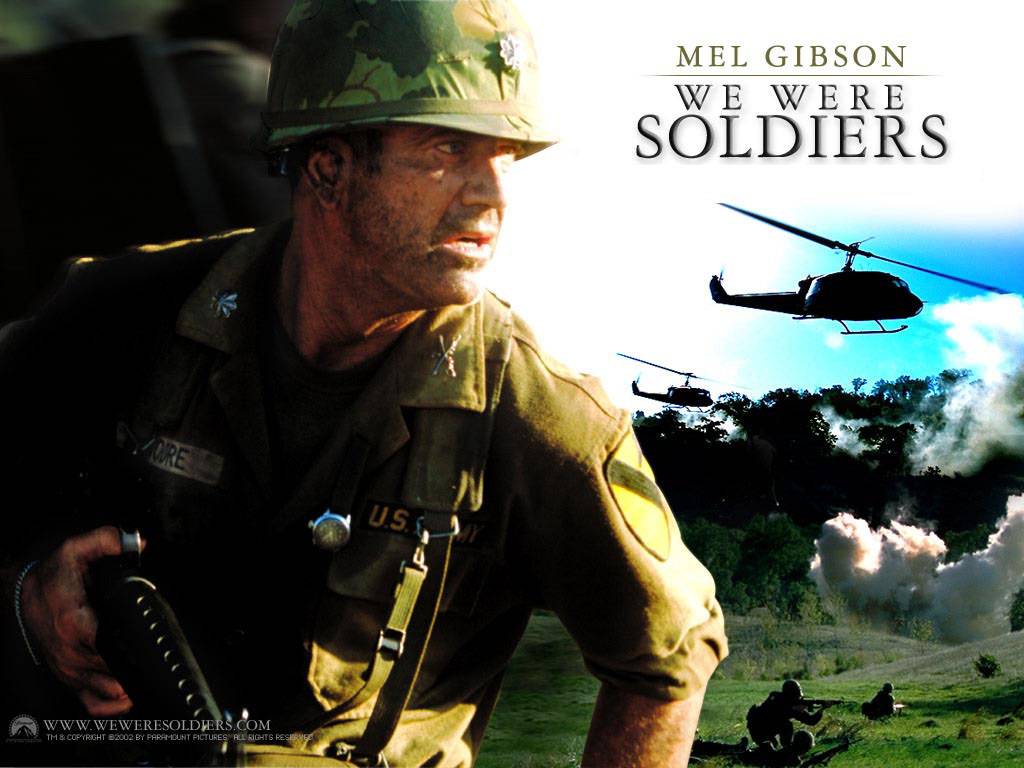
I recalled that there was a film,"We are Soldiers" by Mel Gibson when he as Lieutenant Colonel Harold "Hal" G. Moore: addressed to the 7th Cavalry:

....They say we're leavin' home. We're goin' to what home was always supposed to be. So let us understand the situation. We are goin' into battle against a tough and determined enemy. I can't promise you that I will bring you all home alive. But this I swear before you and before Almighty God:

That when we go into battle, I will be the first to set foot on the field, and I will be the last to stop off. And I will leave no one behind.


Dead or alive, we will all come home together.

Wednesday, May 03, 2006

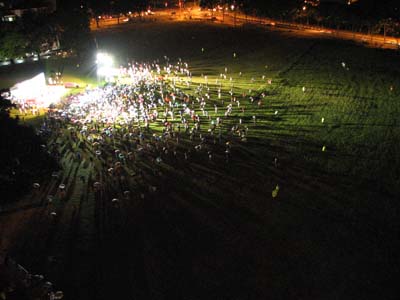
On Hougang field (PAP's Rally) Yawning Bread. May 2006


There was a marked difference from the lighting that the Workers' Party had for their rally the previous night.

The PAP could afford to bring in extra lights.


..In the interest of comparison of crowd size, I went up to the same balcony and took another picture on the PAP night. This is the picture you see above.

I took care to shoot both pictures at about the same time, around 21.15h, when the rallies would be reaching their climax. The crowds in both cases should thus be at their peak.

As I was taking this picture, I asked the man who happened to be standing next to me at the balcony how many people he thought were on the field. He said 500 - 1,000.


....Yawning Bread

It was the sharpest contrast of thing we have heard and seen over the years. Are we hearing and seeing the correct things for the past few years..I wondered.

Tuesday, May 02, 2006

On Hougang field (Worker Party's Rally) Yawning Bread. May 2006


what you did not see on TV and local newspapers


And that's only the central part of the crowd. The swarm was wider than my widest lens....


Addendum - how many people?

If you look at the top picture, you'll see that there were 15-16 people seated on the stage. This suggests that the stage was about 9 metres wide and 5 metres deep.

Now look at the bigger photo. Using the dimensions of the stage as the yardstick, and allowing for the fact that the bottom of the photo would be on a different scale from the back of the photo (due to perspective), I estimate that the area covered by the photo, excluding the road at the back, would be about 150m across and about 200m from bottom of picture to nearly the road.

That's 30,000 sq. metres. This being the thickest part of the crowd, the density was about 3 persons per sq. metre (they were standing shoulder to shoulder - see bottom picture). That means the total number of people encompassed by the bigger picture was about 90,000.

Add those outside the picture (less dense), and perhaps the total number of people at the rally was 100,000 - 120,000.

....Yawning Bread

A picture speaks a thousands of words...and it spoke well and was an awesome sight that amazed me when i took the first glance...

Yawning Bread furthers:-

....Most of the others, however, chose to start leaving. Each of the human backs that had formed the wall in front of me swivelled around to walk past me.

It was then that I saw the face of the man who had been in front of me for the last few minutes. Turning around to depart, he was just 50 cm from my eyes. For a brief moment, we were face to face -- he, a gaunt old man with sunken eyes, a grey crewcut and white stubble.

He had his gnarled hand up against the corner of his eyes, smoothening out the tears. Yes, he had been crying....

Friday, April 28, 2006

Eat less, live more

DIETING according to an old joke, may not actually make you live longer, but it sure feels that way.


Nevertheless, evidence has been accumulating since the 1930s that calorie restriction—reducing an animal's energy intake below its energy expenditure—extends lifespan and delays the onset of age-related diseases in rats, dogs, fish and monkeys.


Such results have inspired thousands of people to put up with constant hunger in the hope of living longer, healthier lives. They have also led to a search for drugs that mimic the effects of calorie restriction without the pain of going on an actual diet.
Initial results of the first systematic investigation into the matter, known as CALERIE (Comprehensive Assessment of Long-term Effects of Reducing Intake of Energy), was sponsored by America's National Institutes of Health.

It took 48 men and women aged between 25 and 50 and assigned them randomly to either a control group or a calorie-restriction regime. Those in the second group were required to cut their calorie intake for six months to 75% of that needed to maintain their weight.


The CALERIE study is a landmark in the history of the field, because its subjects were either of normal weight or only slightly overweight.

At a molecular level, CALERIE suggests these advantages are real.

For example, those on restricted diets had lower insulin resistance (high resistance is a risk factor for type 2 diabetes) and lower levels of low-density lipoprotein cholesterol (high levels are a risk factor for heart disease). They showed drops in body temperature and blood-insulin levels—both phenomena that have been seen in long-lived, calorie-restricted animals. They also suffered less oxidative damage to their DNA.

It was of no wonder that women lived longer than men.

Thursday, April 27, 2006

food that you found in the streets of Korea

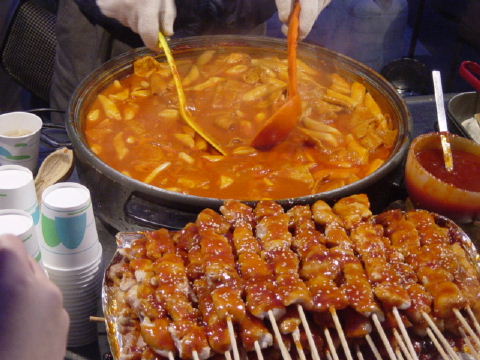
Some of the food from interesting reads of korea blogs:

Eating at such stalls is inexpensive (by Korean standards). Typically a skewer of anything is KRW1,000 - KRW2,000. The price for a plate of teokbokgi varies, depending on what you load it with but generally it shouldn't cost more than KRW2,000 - KRW3,000.
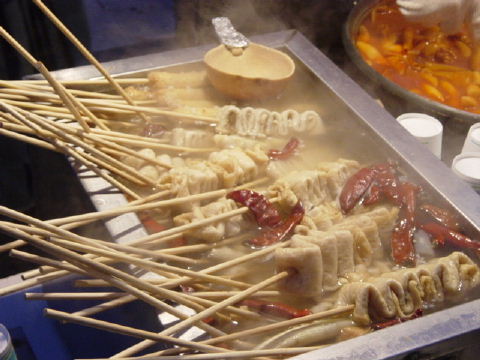
This is odeng, fish cake skewered into a sausage-like form. I actually enjoy the soup more!! The soup is made from turnips and anchovy stock and peppered liberally. Served in paper cups. Very nice on a cold night.
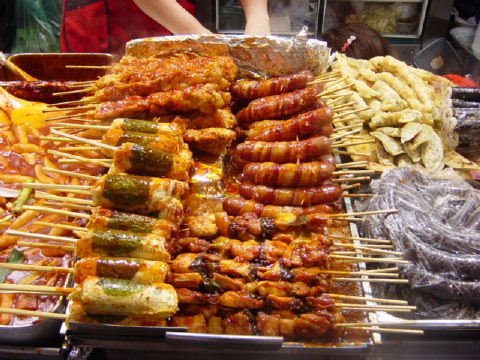
Close-up of the flour-battered deep fried chicken fillet, smothered in sweet and spicy sauce. KRW2,000

Wednesday, April 26, 2006

LUP update

One day, I took a stroll at our nighbourhood estate.
I noticed that some of our 4-room flat had their Lift upgrading programmes. Since 5-room already have lift stops at every floor, that left only 3-room and 4-room flats to be upgraded.

The more I observed, it seemed that only 4-room flats had their lift upgraded, but none so far 3-room flats.

Checked the latest upgrade programmes, and noted that we have to wait for 10 years i.e. 2016 as our block (which was 3-room flat-type) was on the last of the list.

Although we are at lift-landing floor, some of neighbours who are not will have to wait for quite sometime.

Tuesday, April 25, 2006

Soju


Soju (소주)is a notorious rice liquor sold all over the place in Korea.

It mainly comes in little green bottles, but is also known to show up in little juice boxes and big plastic bottles that look like mineral water. At about 20% (40 proof) alcohol its not very strong, but at 1000 won in a convenience store and 3000 won at a bar, its a very cheap drunk.

In Seoul there are 2 main brands: Chamisul (참이슬) and San (산).

San is the one with the picture of a mountain on the bottle.

The Chamisul brand comes from two different distilleries, one in Kyeonggido(경기도) and the other in Chungbuk Cheongwon(충북 청원). The Kyeonggido soju is more bitter than its counterpart.

You can find out which distillery produced a certain bottle of Chamisul by reading the far right edge of the front label. There are other brands of soju in different parts of Korea.

neigbhours

One of friends lived in 5-rooms flat. He has been living there for 10-15 years.
He has peaceful nights after he came back from work and able to have a good rest, watched some TV programmes before turning in.

However his peace was broken when his neignbours on top of his flat had rented out the whole flat to a group of non-Singaporeans.

And they made plenty of noises. When their friends came, it was further agravated when they drank beer, and enjoyed themselves with loud music, louding talking and shouting until 3-4 am in the morning.

My friend has no choice but to call police. When they came, they did not quiet down, but instead challenged the police. The day after became even worse as they made a lot of noise, by shifting their furnitures unneccessary, dropping objects which cause a lot of banging sound just so to irritate him and his family.

He referred this case to MP and MP told him to complain to police and MP also wrote a letter to the flat-owner and National Environment Agency(NEA) of the noise pollutions.

Finally the noise subsized and in the meantime, he has found a new flat and will be moving in soon.

Monday, April 24, 2006

Zhuangzi


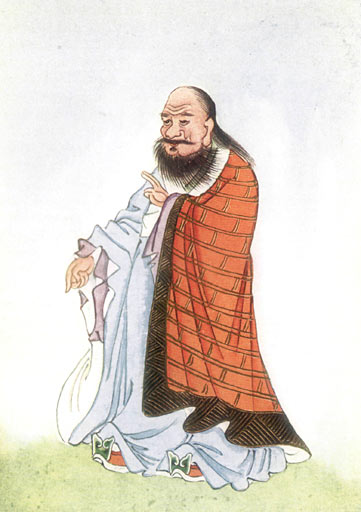
Laozi's had a most famous follower, Zhuang Zi.

In general, Zhuangzi's philosophy arguing that our life is limited and things to know are unlimited.

To use the limited to pursue the unlimited, he said, was foolish. Our language, cognition, etc. are all biased with our own perspective so we should be hesitant in concluding that our conclusions are equally right for all things (wanwu).

We must be wary of our tendency to adopt fixed or dogmatic judgments, evaluations, and standards based on a narrow viewpoint, since this leads to conflict and frustration

Zhuangzi's thought can also be considered a precursor of multiculturalism and pluralism of systems of value. His pluralism even leads him to doubt the basis of pragmatic arguments (that a course of action preserves our lives) since this presupposes that life is good and death bad. In the fourth section of "The Great Happiness" (至樂 zhìlè, the eighteenth chapter of the book), Zhuangzi expresses pity to a skull he sees lying at the side of the road. Zhuangzi laments that the skull is now dead, but the skull retorts, "How do you know it's bad to be dead?"


Another example points out that there is no universal standard of beauty. This is taken from the chapter "On Arranging Things", also called "Discussion of Setting Things Right" or, in Burton Watson's translation, "Discussion on Making All Things Equal" (齊物論 qí wù lùn, the second chapter of the book):

Mao Qiang and Li Ji [two beautiful courtesans] are what people consider beautiful, but if fish see them they will swim into the depths; if birds see them, they will fly away into the air; if deer see them, they will gallop away. Among these four, who knows what is rightly beautiful in the world?


One of his well-known part of the book is also found in the chapter "On Arranging Things".
This section, which is usually called "Zhuangzi dreamed he was a butterfly" (莊周夢蝶 Zhuāng Zhōu mèng dié), relates that one night Zhuangzi dreamed that he was a carefree butterfly flying happily.

After he woke up, he wondered how he could determine whether he was Zhuangzi who had just finished dreaming he was a butterfly, or a butterfly who had just started dreaming he was Zhuangzi. It hints at many questions in the philosophy of mind, philosophy of language, and epistemology. The name of the passage has become a common Chinese idiom, and has spread into Western languages as well.

Zhuangzi's philosophy was very influential in the development of Chinese Buddhism, especially Chan, and Zen which evolved out of Chan. Zhuangzi's points about the limitations of language and the importance of being spontaneous, in particular, were strongly influential in the development of Chan.

Note: The film, "Matrix" used some of these thinking from ZhuangZi. When we woke up, is it a dream or reality? Are we dreaming the things we did are real or in our dream?

Friday, April 21, 2006

Taoism


One of Chinese oldest thinking was Laozi.

He developed the concept of "Tao", often translated as "the Way", and widened its meaning to an inherent order or property of the universe: "The way Nature is".

He highlighted the concept of wei-wu-wei, or "action through inaction". This does not mean that one should sit around and do nothing, but that one should avoid explicit intentions, strong will, and proactive action; one can reach real efficiency by following the way things spontaneously increase or decrease.

Actions taken in accordance with Tao are easier and more productive than actively attempting to counter it. Laozi believed that violence should be avoided when possible, and that military victory was an occasion to mourn the necessity of using force against another living thing, rather than an occasion for triumphant celebrations.

Similar to the counter arguments put foward by Plato in the Republic on various form of government, the Laozi indicated that codified laws and rules result in society becoming more difficult to manage.

Thursday, April 20, 2006

A better tomorrow


In one of my school day, our groups decided to watch the movie," a Better Tommorrow" after the hectic examinations. That day, we went to Bukit Merah Theatre which has since closed down.

It was quite exciting and interesting as we boys liked the thrill of gun-fighting, not forgetting the his slow-motion gun-fighting sequence and also his own action style by director John Woo, frame by frame, you can actually watch the beauty when they fought in close contact.

Leslie Cheung, one of the main actors has since passed away, but his acting was superb.

This film was John Woo's first tense, bloody gangster epic, which he continued on futher on many other movies: Face off, Mission impossible II

After the show, we went to macdonald and had our late lunch.