Sunday, April 09, 2006

(what sports car are you?)

I'm a Ford Mustang!


You're an American classic -- fast, strong, and bold. You're not snobby or pretentious, but you have what it takes to give anyone a run for their money.


"Take the Which Sports Car Are You? quiz.

Saturday, April 08, 2006

The National Minimum Wage Act 1998 in UK

Minimum Wage Act
The National Minimum Wage Act 1998 is universally applicable to ordinary ‘workers,’ that is, anyone who has a contract to do work, except for a consumer or a client Expressly included are those working through job agencies, so they have a duty not to let their profits rake into a worker’s basic entitlement. Home-workers are also included expressly, and the Secretary of State can make order for other inclusions. The SS can also make exclusions, as has been done for au pairs and family members in family business. Those engaged in accredited training can have their entitlement reduced proportional to the hours undertaken. Excluded by the Act are fishermen paid in a share of profits, unpaid volunteers and prisoners
.

Hours are the ‘pay reference period,’ but where pay is not contractually referable to hours, such as pay by output, then the time actually worked must be ascertained. The principle is a very basic one: that hours worked should never as a whole be paid below the minimum. Excluded from ‘worked’ are periods when the worker is on industrial action, time travelling to and from work and absent periods.
When a worker is required to be awake and available for work, then they must also be paid, however this does not prevent so called ‘Zero hours contracts’ being used. That means you are guaranteed no hours, theoretically you are under no obligation, but it is strongly in your interest to be ready to work if your employer requests."


Minimum wages may have the positive effect of:

1. Reducing low-paid work, which may be unfair and exploitative.
2. Stimulating economic growth by increasing the purchasing power of workers.
3. Stimulating economic growth by discouraging labor-intensive industries, thereby encouraging more investment in capital and training.
4. Encouraging many of those who would normally take low-wage jobs to stay in (or return to) school and thus to accumulate human capital.

On the other hand, minimum wages may have the negative effects of:

1. Curbing economic growth by increasing the cost of labor.
2. Decreasing incentive for some low-skilled workers to gain skills.
3. Cause higher unemployment rates among the low skilled and uneducated labor as the price of labor increases to favor the more skilled or machines.
4. Cause workers laid off because of higher labor costs to consume government assistance thus increasing the cost of government.


The effects of minimum wage laws, both positive and negative, may be increased by 'knock-on effects'. Where unions are not strong, wages for those earning slightly more than the minimum may be reduced, while those earning less than the minimum are forced to compete for work at pay levels above their experience, skill or education.

Strong unions may be able to demand wage increases for workers already earning above the minimum wage. For example, some labor union contracts are based on a fixed percentage or dollar amount above the minimum wage. Certain public grants or taxes are based on a multiple of the minimum wage. (For example, a worker may have an exemption if his earnings are below 2.5 minimum wages.)

Friday, April 07, 2006

handshake


Heard from radio.

There was a story about a man who had worked faithfully in a company for many,many years. He was promoted and had a good salary, and enjoyed peacefull lives with his families. He was earning S$5000 per month.

Then came one day the boss hired a young chap with salary of S$2000. The boss brought the man to a good restaurant.

They have a long talk and he finally told him he needed not come tomorrow. He handed him a cheque for his years of service. The boss shook hands and wished him best of luck.

Thursday, April 06, 2006

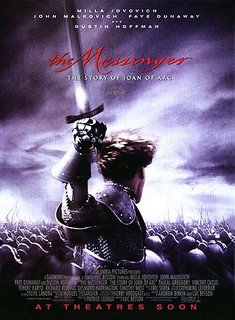
Joan of Arc


The Early Years
She was born on January 6th around the year 1412, to Jacques and Isabelle d'Arc in the little village of Domremy, in the Barrois region (now part of "Lorraine") on the border of eastern France.

Although at the time she was born a shaky truce was still in effect between France and England, a civil war had erupted between two factions of the French Royal family which would allow the English to re-invade.

One faction, called the "Orleanists" or "Armagnacs", was led by Count Bernard VII of Armagnac and Duke Charles of Orleans (whom Joan would later regard with special warmth); their rivals, known as the "Burgundians", were led by Duke John-the-Fearless of Burgundy. The forces of his pro-English son, Philip "the Good", would later capture Joan and hand her over to the English; one of his loyal supporters, a pro-Burgundian clergyman and English advisor named Pierre Cauchon, would later arrange her conviction on their behalf.

With the French divided into warring parties and negotiations to renew the truce with England a failure, King Henry V invaded France in August of 1415 after reviving his family's faded claim to the French throne. On October 25th an Armagnac-dominated French army was cut to pieces by Henry's forces at the battle of Agincourt.

The English returned in 1417, conquering much of northern France and gaining the support (in 1419) of the new Burgundian Duke, Philip-the-Good, who agreed to recognize Henry V as the legal heir to the French throne while rejecting the rival claim of the man whom Joan would consider the rightful successor, Charles of Ponthieu (later known as Charles VII), the last heir of the Valois dynasty which had ruled France since 1328.

It was around 1424, when she was 12, that Joan said she began to have visions of Saints Catherine and Margaret (two early Christian martyrs) and St. Michael the Archangel (identified in the Bible as the commander of Heaven's armies who led the war against Satan).

Michael had been chosen in 1422 as one of the patron saints of the French Royal army (along with Saint Denis), and had long been the patron of the fortified island of Mont-St-Michel, which had been holding out against repeated English assaults. The rest of northern France was less successful: Charles gradually lost the allegiance of all the important cities north of the Loire River except for Tournai in Flanders and Vaucouleurs, near Domremy. With Paris under occupation since 1418, his court was now located in the city of Bourges-en-Berri in central France, hemmed in by hostile forces on nearly every side: pro-English Brittany to the northwest, English-occupied Normandy to the north, the Burgundian hereditary domains of Flanders, Burgundy, and Franche-Comte to the east and northeast; and the English hereditary domain of Aquitaine to the southwest.

In 1428 the situation became critical, as the English prepared to attack the city of Orleans and thereby gain control over the crucial valley of the Loire River, the northern perimeter of Charles' dwindling domain.

It was at this time, as Joan later said, that she finally obeyed the orders of her saints to lead an army against the English and Burgundians, explaining that God had taken pity on the French for the suffering they had endured. As a child, these visions had merely instructed her to, quote: "be good [or pious], [and] to go to church regularly"; but over the next several years they had persistently called for her to go to the local commander at Vaucouleurs to obtain an escort to take her to the Royal Court.

She said she finally obeyed in May of 1428, and found a way for a family relative, Durand Lassois, to take her to Vaucouleurs to speak with the garrison commander, Lord Robert de Baudricourt, who had remained loyal to the Armagnacs despite being a vassal of the pro-Burgundian Duke of Lorraine. Baudricourt refused to listen to her, and she returned home.

Shortly after her return, in July of 1428, Domremy found itself in the path of a Burgundian army led by Lord Jean de Vergy, forcing the villagers to take refuge in the nearby city of Neufchateau until the troops had passed. Vergy's army laid siege to Vaucouleurs and forced Baudricourt to pledge neutrality.

On October 12th Orleans was placed under siege by an English army under the Earl of Salisbury. The eyewitness accounts and other 15th century sources say that the situation for Charles was rather hopeless by that stage: his treasury at one point was down to less than "four ecus"; his armies were a motley collection of local feudal contingents and foreign mercenaries; and he himself, according to the surviving accounts, was torn with doubt over the validity of his cause - since his own mother, cooperating with the English, had allegedly declared him illegitimate in order to deny his claim to the throne. Now Orleans, the last major city defending the heart of his territory, was in the grip of an English army.

This was the situation facing his government, by that point located in the city of Chinon on the Vienne River, when Joan was finally granted Baudricourt's permission, after her third attempt, to go with an escort to speak with Charles. One account says that she convinced Baudricourt by accurately predicting a French defeat near Rouvray, north of Orleans, when an army under the Count of Clermont unsuccessfully tried to stop an English supply convoy bringing food to the besiegers around Orleans. When Baudricourt was informed of the disaster he promptly arranged for an armed escort to bring Joan through enemy territory to Chinon.

Following the standard procedure, her escorts dressed her in male clothing when camped in the fields with soldiers, for safety and modesty's sake. She would call herself "La Pucelle" (the Maiden or Virgin), explaining that she had promised her saints to keep her virginity "for as long as it pleases God", and it is by this nickname that she is usually described in the documents.

Chinon
After eleven days on the road, she arrived at Chinon around March 4th and was brought into Charles' presence, after a delay of two days, by Count Louis de Vendome.

There are many eyewitness accounts of this event: Lord Raoul de Gaucourt, a Royal commander and bailiff of Orleans, recalled that "...she presented herself before his Royal majesty with great humility and simplicity, a poor shepherd girl, and ... said to the King: 'Most illustrious lord Dauphin, I have come and am sent in the name of God to bring aid to yourself and to the kingdom."

However, Charles first wanted her to be examined by a group of theologians in order to test her orthodoxy, and for that purpose she was sent to the city of Poitiers about 30 miles to the south, where pro-Armagnac clergy from the University of Paris had congregated after Paris came under English occupation a decade earlier. She was questioned for three weeks before they gave her their approval [click here to see the official text of their conclusions] and told Charles that he could grant her titular command of an army - an arrangement which was occasionally given to religious visionaries during the medieval period.

While still at Poitiers she told a clergyman named Jean Erault to record an ultimatum to the English commanders at Orleans around March 22, the first of eleven surviving examples of the letters she dictated to scribes during the course of her military campaigns. In this ultimatum she begins with the "Jesus-Mary" slogan which would become her trademark (borrowed from the Catholic clergy known as mendicants - Dominicans, Franciscans, Carmelites, and Augustinians - who made up a large portion of the priests in her army). She then goes on to inform the English that the "son of Saint Mary" [i.e., Jesus Christ] supports Charles VII's claim to the throne, and repeatedly advises the English to "go away [back] to England" ("allez-vous-en en Angleterre") or she will "drive you out of France" ["bouter vous hors de France"].

The English, in place of a reply, would detain the two men who delivered the message. She would find that more forceful methods would be needed to convince the English to pull their troops out of the Loire Valley.

The Army
After providing her with a suit of armor "made exactly for her body" (in the words of one eyewitness), and a banner with a picture of "Our Savior" holding the world "with two angels at the sides", on a white background covered with gold fleurs-de-lis, they brought her to the army at Blois, about 35 miles southwest of Orleans.

It was here that she began to reform the troops by expelling the prostitutes from the camp (sometimes at sword point, according to several eyewitnesses) and requiring the soldiers to go to church and confession, give up swearing, and refrain from looting or harassing the civilian population.

Her arrival had another valuable effect on the army: men who would otherwise have refused to serve Charles' defeated cause now began to volunteer for the campaign, as word that a saint was now at the head of the army began to change minds.

Orleans
The army moved out from Blois around April 25th and arrived in stages at the besieged city between April 29th and May 4th. A small force had come out to meet them at Checy, five miles upriver from Orleans; but as there weren't enough barges to transport the entire body of troops across the river, Joan herself and a small group of soldiers were escorted into the city by Lord Jean d'Orleans (better known by his later title, Count of Dunois), the man in charge of the city's defense due to his status as the half-brother of the Duke of Orleans. The rest of the army would arrive later by a different route, its numbers greatly reduced by discouraged men who decided to leave without the Maiden there to encourage them.

On May 4th the rest of her troops made it into the city, and a few hours later an assault was launched against an English-held fortified church called Saint Loup, about a mile east of Orleans. The surviving accounts say that the position was carried after Joan rode up with her banner, encouraging the troops up and over the ramparts. The English casualties totaled 114 dead and 40 captured.

Her role in this engagement would become typical: two different sources quote her as saying that she always carried her banner into battle (rather than a weapon, as is sometimes supposed), since, as she explained, she didn't want to harm anyone; and there are many eyewitness accounts which repeatedly describe her encouraging the troops to greater efforts by placing herself in the same danger that they themselves faced.

On the following day she sent her final ultimatum to the English commanders at Orléans, this time having an archer deliver the note with an arrow rather than risk losing another messenger.

The remaining English positions fell swiftly: on May 6th an attack was made against a fortified monastery called the "Bastille des Augustins", which controlled the southern approach to a pair of towers called Les Tourelles, at the southern end of Orleans' bridge. Flanking these to the east was a fortified church called St-Jean-le-Blanc, near which the English had been bombarding the city with one of their largest cannons, called "le Passe-volant".

The French troops were sent over a pontoon bridge around the hour of Tierce (9 a.m.), and induced the English to abandon St-Jean-le-Blanc without a fight; the more substantial fortress of Les Augustins was then assaulted, with the saint leading the initial charge alongside La Hire. The fortress was then stormed and overrun with few losses. This placed Les Tourelles within striking range: during the course of the next morning's assault, Joan herself was wounded by an arrow while helping the soldiers set up a scaling ladder.

It seems she stayed behind the area of fighting for most of the day, but returned to the field near dusk in order to encourage the demoralized troops to one final effort which met with success. This proved to be decisive: the English abandoned the siege the next day, and moved their remaining troops off to Meung-sur-Loire and other positions along the river.
Orleans was the English high-water mark: never again would they come so close to achieving a final victory against Charles, who would soon be anointed as King Charles VII.

The Loire Valley and Reims

The unexpected lifting of the siege led to the support of a number of prominent figures. Duke Jean V of Brittany rejected his previous alliance with the English and promised to send troops to Charles' aid. The Archbishop of Embrun wrote a treatise [June 1429] declaring Joan to be divinely inspired, and advised Charles to consult with her on matters concerning the war.

The joy felt by Charles himself when he and Joan met again at Loches on the 11th was neatly summed up in an account by Eberhardt von Windecken: "... Then the young girl bowed her head before the King as much as she could, and the King immediately had her raise it again; and one would have thought that he would have kissed her from the joy that he experienced."

On the other side, the Duke of Bedford (the chief English commander in France) reacted by calling up as many troops as possible from English-occupied territory; the Duke of Burgundy made plans to take a more active role in helping his allies in the field, although as usual he demanded a modest sum (250,000 livres) to help offset his costs.

After the Dauphin's joyful reunion with the saint, she convinced him to take an army north to Reims to be crowned, as custom required. This was no simple task, since Reims at that time lay deep within enemy-held territory; in order to open a way for a northward campaign, the Royal army first set about the job of clearing out the remaining English positions in the Loire Valley, with the Duke of Alencon being given command of the venture.

The army's first target was Jargeau, ten miles to the southeast of Orleans. At least 3,600 armored troops, plus an unknown number of lightly-armed 'commons', were present for duty. The town was reached on June 11th; the main assault came the next day after an artillery bombardment in which Jargeau's largest tower was felled by a large cannon from Orleans nicknamed "La Bergere" ("the Shepherdess"), presumably named after the saint herself. The latter's role was also crucial: carrying her banner up front with the troops, she was hit in the helmet with a stone but immediately got back on her feet and encouraged the soldiers to storm the ramparts by shouting: "Friends, friends, up! Up! Our Lord has condemned the English". [In the archaic French of the 15th century: "Amys, amys, sus! Sus! Nostre Sire a condempne les Angloys"] The fortifications were taken, and the English were driven back across Jargeau's bridge. The survivors surrendered.
Beaugency was taken on the 17th after the English garrison negotiated an agreement allowing them to withdraw. That evening the English troops at Meung, reinforced by an army under Sir John Fastolf, offered battle to the French but subsequently decided to fall back the next day, riding northward in an effort to make it back to more secure territory. The French pursued (goaded on by Joan, saying in effect that they should use their "good spurs" to chase the enemy); the two armies clashed south of Patay, where a rapid cavalry charge led by La Hire and other nobles of the vanguard overran a line of 500 English archers which had been set up to delay the French as long as they could. Confusion among the main contingents of the English army completed the rout, and the French cavalry swept their opponents from the field. The English heralds announced their losses at 2,200 men, compared to only three casualties for the French - the reverse of so many other battles in that war.

The March to Reims

When Charles met his commanders after this victory, the decision was made to press on northward to Reims. Gathering the army together at Gien on the Loire, both Charles and Joan began sending out letters requesting various cities and dignitaries to send representatives to the coronation.

The Royal army finally moved out from Gien on the 29th, after a delay which caused Joan much distress. The Burgundian-held city of Auxerre was reached the next day, and an agreement with the city leaders was worked out after three days of negotiations: the army was allowed to buy food, and Auxerre agreed to pay the same obedience to Charles as Troyes, Chalons, and Reims chose to do.

The next stop was Troyes, garrisoned by 500-600 Burgundian troops.
On July 4th, at St. Phal near Troyes, she sent a letter to the citizens of the latter city asking them to declare themselves for Charles, adding that "with the help of King Jesus", Charles will enter all of the towns within his inheritance regardless of their wishes.
Troyes initially ignored the summons. While Charles' commanders debated their next course of action, Joan told them to promptly besiege the town, predicting they would gain it in three days "either by love or by force". Lord Dunois remembered that she then began ordering the placement of the troops, and did it so well that "two or three of the most famous and experienced soldiers" could not have done it better. Troyes surrendered the next day without a fight. The Royal army entered on the 10th; by the 14th it had reached Chalons-sur-Marne to the north, which opened its gates with greater promptitude than Troyes.

Reims followed suit after Joan counseled Charles to "advance boldly"; and at last the Dauphin was poised to receive the crown which had been denied him years earlier.
During the ceremony Joan stood near Charles, holding her banner. The memorable words of one 15th century source describes the scene: after Charles was crowned, Joan "wept many tears and said, 'Noble king, now is accomplished the pleasure of God, who wished me to lift the siege of Orleans, and to bring you to this city of Reims to receive your holy anointing, to show that you are the true king, and the one to whom the kingdom of France should belong.'" It adds: "All those who saw her were moved to great compassion."

The Siege of Paris

On July 17th, the day of the coronation, Joan sent a letter to the Duke of Burgundy asking why he didn't bother to show up for the coronation and proposing that he and Charles should, quote, "make a good firm lasting peace. Pardon each other completely and willingly, as loyal Christians should do; and if it should please you to make war, go against the Saracens." (The Islamic Saracens, frequently at war with Christendom, were one of her preferred targets for legitimate military action).

Although the Duke himself stayed away, his emissaries had arrived in Reims on the day of the coronation and began negotiations which resulted in a 15-day truce being declared - not exactly the "good, firm, lasting peace" that Joan wanted, and in fact such a short truce immediately following in the wake of Charles' triumph could serve only to give the English and Burgundians time to regroup.

Charles followed up this treaty by taking his army on a city-by-city tour of the Ile-de-France, accepting the loyalty of each in turn. Near Crepy-en-Valois, Joan was quoted as saying that she now hoped that God would permit her to return to her family's home. The army of the Duke of Bedford was nearby, however - Bedford had recently sent off a challenge to Charles VII asking him to meet the English at "some place in the fields, convenient and reasonable" for a showdown. The place turned out to be the village of Montpilloy just southwest of Crepy, where the two armies clashed on August 14th and 15th, with Joan herself going so far as to lead a charge against the English fortified positions to try to draw them out; but only a prolonged series of skirmishes took place, and both armies withdrew on the night of the 15th.

The French went back to Crepy, and then proceeded on to Compiegne to the northwest. At the same time negotiations with the Burgundians were getting underway, with the positions of the two parties oddly reversed: while French armies were rapidly advancing, the French delegation was offering sweeping concessions, bargaining as if they were on the losing side. On the 21st a treaty was signed providing for a four-month truce designed to prevent the Royal army from continuing its offensive, coupled with the added provision that several towns should be handed over to the Duke of Burgundy. A peace conference was promised for the spring, although the documents show that the English were preparing to launch an offensive around the same time.

Meanwhile, King Charles remained at Compiegne. On the 23rd Joan and the Duke of Alencon left on their own initiative with a body of troops and made their way to the region around Paris, arriving at St-Denis on the 25th and sending out skirmishers "up to the gates of Paris" over the next several days. A brief siege began on September 8th, but Joan was hit in the thigh that day by a crossbow dart while trying to find a place for her troops to cross the city's inner moat. She was carried back against her will, all the while urging on another assault. No further attack would be forthcoming: on the 9th the army was ordered back to St-Denis, where the King was located by that point; when he learned that the commanders were thinking of crossing back to Paris by a bridge constructed on the orders of the Duke of Alencon, Charles ordered the bridge destroyed. On the 13th the troops began the discouraging march back to the Loire. On September 21st the army, by then back at Gien, was disbanded. The Duke of Alencon's squire and chronicler, Perceval de Cagny, summed up this event with the terse and bitter statement: "And thus was broken the will of the Maiden and the King's army." Like many of those who had served in that army, Cagny tended to feel that the disastrous policies promoted by the Royal counselors - most blamed Georges de la Tremoille in particular - had fatally undermined Joan's successes.

The commanders were dispersed to their own estates or former areas of operations. When the Duke of Alencon, preparing a campaign into Normandy, asked that Joan be allowed to join him, the Royal court refused.

Winter

During this period of inactivity, Joan was moved around to various residences of the Royal court, such as at Bourges and Sully-sur-Loire. The next military venture, albeit a fairly small one, was the attack against Saint-Pierre-le-Moutier, which was captured on November 4. Jean d'Aulon, Joan's squire and bodyguard, remembered that the initial assault was a failure and the soldiers in full retreat, except for Joan herself and a handful of men clustered around her. He rode up to her and told her to fall back with the rest of the army, but she refused, declaring that she had "fifty-thousand" troops with her. Shouting for the army to bring up bundles for filling in the town's moat, she initiated a new assault which took the objective "without much resistance", according to the astonished d'Aulon.
The next target was the town of La-Charite-sur-Loire. Since the army was undersupported by the Royal court, she sent letters off to nearby cities asking them to donate supplies. Clermont-Ferrand responded by sending two hundredweight of saltpeter, an equal amount of sulfur, and two bundles of arrows.

The siege of La Charite was a dismal failure: the weather was chilly by that point in the year; the army had "few men"; the Royal court did little to provide support for the troops ("the King", according to Cagny, "made no diligence to send her food supplies nor money to maintain her army"). The army withdrew after a month, abandoning their artillery.
She spent the rest of the winter at various Royal estates while the English and Burgundians regrouped for a new campaign.

The month of March 1430 saw a flurry of letters being sent out by Joan, all of them dictated in the town of Sully-sur-Loire. Two of these, on the 16th and 28th, went to the citizens of Reims, assuring them that she would aid them in the event of a siege. On March 23rd she sent an ultimatum to the Hussites, addressed as "the heretics of Bohemia", warning that she would lead a crusading army against them unless they "return to the Catholic faith and the original Light".

In late March or early April Joan finally took the field again with her small group (her brother Pierre, her confessor Friar Jean Pasquerel, her bodyguard Jean d'Aulon, and a few others), escorted by a mercenary unit of about 200 troops led by Bartolomew Baretta of Italy. They headed for Lagny-sur-Marne, where French forces were putting up a fight against the English. It was here, in the midst of war, that she was credited with helping to save an infant: according to her own testimony, she and other virgins of the town were praying in a church on behalf of a dead baby, that it might be revived long enough to baptize it; she said the baby came to life, yawned three times, and was hastily baptized before it died again.
Around Easter (April 22nd) she was at Melun where, as she would later say, her saints had revealed to her that she would be captured "before Saint John's Day" (June 24). She had said at many points that capture and betrayal were her greatest fears.

Meanwhile the Burgundian army was on the move despite all the promises of peace; and on May 6th Charles VII and his counselors finally admitted that the Royal Court had been manipulated by the Duke, "...who has diverted and deceived us by truces and otherwise", as Charles wrote in a letter on that date.
He would now order a damaging series of assaults on Burgundian territory to the east, but in the northeast the Armagnacs were in trouble: the Duke of Burgundy was now there in force. His strategy, based on an elaborate document outlining his plans, called for the bridge at Choisy-au-Bac to be taken, followed by the monastery at Verberie, and then a methodical series of assaults to block all the supply routes into Compiegne, which had refused to submit to him under the terms of the agreement signed the previous year. Choisy-au-Bac was taken on May 16; on the 22nd the Duke laid siege to Compiègne. Joan was unwilling to let this city, which had showed such courage in its defiance, fall unaided: reinforced with 300 - 400 additional troops picked up at Crepy-en-Valois, on the morning of the 23rd at sunrise she and her tiny army slipped into Compiegne.
She apparently knew what was coming: according to the later statements of two men who had, as young boys, been among a group of curious children watching Joan pray in one of Compiegne's churches that morning, she was much troubled in spirit and told the children to "pray for me, for I have been betrayed." Later that day she was among those leading a sortie against the enemy camp at Margny when her troops were ambushed by Burgundian forces concealed behind a hill called the Mont-de-Clairoix. Having decided to stay with the rearguard during the retreat, she and her soldiers were trapped outside the city and pinned up against the river when the drawbridge was prematurely raised behind them. Burgundian troops swarmed around her, each asking her to surrender. She refused, and was finally pulled off her horse by an enemy archer. A nobleman named Lionel of Wandomme, in the service of John of Luxembourg, made her his captive.
A Burgundian chronicler who was present, Enguerrand de Monstrelet, wrote that the Armagnacs were devastated by Joan's capture, while the English and Burgundians were "overjoyed, more so than if they had taken 500 combatants, for they had never feared or dreaded any other commander... as much as they had always feared this maiden up until that day."
The garrison commander at Compiegne, Guillaume de Flavy, came under immediate suspicion as a traitor, although his guilt was never proved. Since the Royal Court at that time was divided into factions, each of which routinely tried to eliminate any prominent leader who was supported by their rivals, it would be likely that a small group within the Court may have betrayed her. The evidence indicates that Charles VII probably was not among the guilty, however, nor did he abandon her, as is so often claimed: according to the archives of the Morosini, who were in contact with the Royal Court, Charles VII tried to force the Burgundians to return Joan in exchange for the usual ransom, and threatened to treat Burgundian prisoners according to whatever standard was adopted in Joan's case. The pro-Anglo-Burgundian University of Paris, which later helped arrange her conviction, sent an alarmed letter to John of Luxembourg reporting that the Armagnacs were "doing everything in their power" to try to get her back. Dunois and La Hire would lead four campaigns during that winter and the following spring which seem to have been designed to rescue her by military means.
These attempts failed, and the Burgundians refused to ransom her.

The Trial

After four months spent as a prisoner in the chateau of Beaurevoir, Joan was transferred to the English in exchange for 10,000 livres, much as Henry V had similarly paid his nobles for transferring their prisoners to him after the battle of Agincourt. Pierre Cauchon, a longtime supporter of the Anglo-Burgundian faction, was given the job of procuring her and setting up a trial. He had been given many such tasks in the past: a letter from Duke John-the-Fearless of Burgundy, dated 26 July 1415, authorized Cauchon to bribe Church officials at the Council of Constance in order to influence the Council's ruling concerning a murder which the Duke had ordered. They now needed someone who was willing to engineer a murder under the guise of an Inquisitorial trial, and Cauchon again got the job.
English government documents record in great detail the payments made to cover the costs of obtaining Joan and rewarding the various judges and assessors who took part in her trial [click here to see some of these financial accounts], and we know that the clergy who served at the trial were drawn from their supporters. Some of these men later admitted that the English conducted the proceedings for the purposes of revenge rather than out of any genuine belief that she was a heretic. [click here to see some of this testimony]

Joan was held at the fortress of Crotoy before being brought to Rouen, the seat of the English occupation government. Although Inquisitorial procedure required suspects to be held in a Church-run prison and female prisoners to be guarded by nuns rather than male guards (for obvious reasons), Joan was held in a secular military prison with English soldiers as guards. According to several eyewitness accounts, it was for this reason that she clung to her soldiers' outfit and kept the pants and tunic "firmly laced and tied together": the trial transcript says that she wore two layers of such pants, both attached to the tunic with a total of over two dozen cords, and many eyewitnesses quoted her as saying that this was now her only means of defending herself against rape, since a dress didn't offer any such protection. The tribunal eventually decided to use this against her by charging that it violated the prohibition against cross-dressing, a charge which intentionally ignored the exemption allowed in such cases of necessity by medieval doctrinal sources such as the "Summa Theologica" and "Scivias". The eyewitnesses said that Joan pleaded with Cauchon to transfer her to a Church prison with women to guard her, in which case she could safely wear a dress; but this was never allowed.

The trial included a series of hearings from February 21st through the end of March 1431. Normally, Inquisitorial tribunals were supposed to hear witness testimony against the accused and base any verdict upon such testimony, but in this case the only witness called was the accused herself. The trial assessors, as a number of them later admitted, therefore resorted to trying to manipulate her into saying something that might be used against her. There were other profound deviations from lawful procedure. As many historians have pointed out, the theological arguments put forward by Cauchon and his associates are mostly a set of subtle half-truths, not only on the "cross-dressing" charge but also concerning issues such as the authority of the tribunal: standard Inquisitorial procedure required such tribunals to be overseen by non-partisan judges, otherwise the trial could be automatically rendered null and void; similarly, the accused was allowed to appeal to the Pope. The eyewitnesses said Joan repeatedly asked for both of these rules to be honored, but such was never granted. These eyewitnesses likewise related that she submitted to the authority of both the Papacy and the Council of Basel, but the latter was left out of the transcript on Cauchon's orders and the former was entered in a form which distorted her statements on the matter. The dispute between Joan and her judges therefore largely revolved around the legitimacy of the tribunal as an impartial jury of the Church Universal, and medieval ecclesiastic law is on her side here. [click here for more information about this issue].
Early in the trial an attempt was made to link her to witchcraft by claiming her banner had been endowed with "magical" powers, that she allegedly poured wax on the heads of small children, and other accusations of this sort, but these charges were dropped before the final articles of accusation were drawn up on April 5th. In one of the more desperate bids to discredit her, Cauchon objected to her use of the "Jesus-Mary" slogan which, ironically, was used by the Dominicans and Franciscans who largely ran the Inquisitorial courts. Her saints were dismissed as "demons", despite the transcript's own description that they had counseled her to "go regularly to Church" and maintain her virginity.
In the end, Cauchon would convict her on the cross-dressing charge, which he utilized in a manner which gives an indication of his character. According to several eyewitnesses - the trial bailiff Jean Massieu, the chief notary Guillaume Manchon, the assessors Friar Martin Ladvenu and Friar Isambart de la Pierre, and the Rouen citizen Pierre Cusquel - after Joan had finally consented to wear a dress, her guards immediately increased their attempts to rape her, joined by "a great English lord" who tried to do the same. Her guards finally took away her dress entirely and threw her the old male clothing which she was forbidden to wear, sparking a bitter argument between she and the guards that "went on until noon", according to the bailiff. She had no choice but to put on the clothing left to her, after which Cauchon promptly pronounced her a "relapsed heretic" and condemned her to death. Several eyewitnesses remembered that Cauchon came out of the prison and exclaimed to the Earl of Warwick and other English commanders waiting outside: "Farewell, be of good cheer, it is done!", implying that he had orchestrated the trap that the guards had set for her.

The scene of her execution is vividly described by a number of those who were present that day. She listened calmly to the sermon read to her, but then broke down weeping during her own address, in which she forgave her accusers for what they were doing and asked them to pray for her. The accounts say that most of the judges and assessors themselves, and a few of the English soldiers and officials, were openly sobbing by the end of it. But a few of the English soldiers were becoming impatient, and one sarcastically shouted to the bailiff Jean Massieu, "What, priest, are you going to make us wait here until dinner?" The executioner was ordered to "do your duty".

They tied her to a tall pillar well above the crowd. She asked for a cross, which one sympathetic English soldier tried to provide by making a small one out of wood. A crucifix was brought from the nearby church and Friar Martin Ladvenu held it up in front of her until the flames rose. Several eyewitnesses recalled that she repeatedly screamed "...in a loud voice the holy name of Jesus, and implored and invoked without ceasing the aid of the saints of Paradise". Then her head drooped, and it was over.

Jean Tressard, Secretary to the King of England, was seen returning from the execution exclaiming in great agitation, "We are all ruined, for a good and holy person was burned." The Cardinal of England himself and the Bishop of Therouanne, brother of the same John of Luxembourg whose troops had captured Joan, were said to have wept bitterly. The executioner, Geoffroy Therage, confessed to Martin Ladvenu and Isambart de la Pierre afterwards, saying that "...he had a great fear of being damned, [as] he had burned a saint." The worried English authorities tried to put a stop to any further talk of this sort by punishing those few who were willing to publicly speak out in her favor: the legal records show a number of prosecutions during the following days.

It would not be until the English were finally driven from Rouen in November of 1449, near the end of the war, that the slow process of appealing the case would be initiated. This process resulted in a posthumous acquittal by an Inquisitor named Jean Bréhal, who had paradoxically been a member of an English-run institution during the war. Bréhal nevertheless ruled that she had been convicted illegally and without basis by a corrupt court operating in a spirit of "...manifest malice against the Roman Catholic Church, and indeed heresy". The Inquisitor and other theologians consulted for the appeal therefore denounced Cauchon and the other judges and described Joan as a martyr, thereby paving the way for her eventual beatification in 1909 and canonization as a saint in 1920, by which time even English writers and clergy no longer showed the opposition that their predecessors had. During World War I, in the midst of the canonization process and a period of French-English detente, Allied soldiers would pay tribute to the heroine by invoking her name on battlefields not far from her own.

Wednesday, April 05, 2006

CPF


In January 1999, the employer's CPF contribution rate was reduced by 10%-points to 10% of wages as part of the cost cutting package to cushion the impact of the Asian economic crisis on businesses. With the quick economic rebound, the employer's CPF contribution rate was partially restored by 2%-points to 12% of wages in April 2000.

In view of the strong economic growth and rising wage pressures, a higher quantum of the employers' CPF contribution rate should be restored.After consulting employers and the unions, the Government has decided to raise the employers' CPF contribution rate by 4%-points, from 12% of wages currently to 16% with effect from 1 January 2001.

In 2005, our Singapore Economy grew by 6.4%. As then Prime Minister Goh Chok Tong delivered his 13th National Day Rally speech on 17 Aug 03 at the NUS University Cultural Centre said, "I would, therefore want the option of cutting CPF in bad years, and conversely, putting more into the CPF in good years"

So, since the economy had done well last year, think it is time to revise upwards the employers's contribution back to 20%.

PS: CPF changes take effect from 1 Oct 2003 with employers' contribution rate down from 16% to 13% due to poor economy.

Tuesday, April 04, 2006

Lift Upgrading Programme

Press release on 7 sept 2001
The new Lift Upgrading Programme was introduced in March 2001 in response to requests from Members of Parliament for more and earlier lift upgrading works to provide greater convenience to HDB residents. To speed up lift upgrading for high-rise HDB blocks, the LUP can be carried out as part of the MUP or the IUP from 2001 onwards. In addition, MND will select a number of precincts each year solely for the purpose of lift upgrading.

The scope of works will include installation of new lifts and lift shafts, upgrading of existing lifts and addition of new lift landings, where technically feasible. With the implementation of the LUP, the limited lift upgrading works that are currently carried out under the IUP will be subsumed under the new programme.

HDB will conduct a special poll for each LUP precinct. All flat owners in an HDB block, except those living on the ground floor and floors that already have lift landings, will have to vote and co-pay for the lift upgrading works. The LUP will proceed only if 75% or more of the households who stand to benefit from the lift upgrading works vote in favour of the LUP. Polling for precincts in the Demonstration Phase will start in the next one to two months.

The cost of the lift upgrading works will be co-shared among the Government, Town Councils and the flat owners. To ensure that the flat owners’ share of the lift upgrading cost is affordable, the Government will subsidise 75% to 90% of the cost of the lift upgrading works. The actual proportion will depend on the flat type and block configuration.

Town Councils will also be allowed to use their sinking funds to co-pay the remaining cost with the flat owners. For lift upgrading for a typical 4-room flat in a standard block, the Government will pay about $10,000, while Town Councils and the owner will each pay about $900.

Flat owners in segmented blocks will have to pay a higher amount because lift upgrading for these blocks will cost considerably more. This is because new lifts and lift shafts have to be added, and the lifts will serve a smaller number of flats. However, the Government will cap the maximum amount that each household has to pay at $3,000.

HDB flat owners need only pay for the lift upgrading cost after the works are completed. On average, this will be about 2 years from the date of announcement. Flat owners can pay for their share of the lift upgrading costs either in one lump sum or by monthly instalments over a 5 or 10-year period, using their CPF savings or cash. HDB will also extend the existing assistance measures under the MUP to flat owners who have difficulties paying for the LUP.


Mah Bow Tan, Minister of MND:-
Lift upgrading in HDB estates, Members would have heard the Prime Minister announce that MND will be targeting to complete the Lift Upgrading Programme in 10 years for all eligible blocks. Members have also asked whether we can speed up the programme. Let me now give some details about how we intend to implement the LUP in 10 years, as well as to address some of the Members' concerns and suggestions.

We introduced LUP in 2001, and that was to meet the needs of our ageing population by providing lifts on every floor, and the programme has been very, very popular with residents. I say that it is going to be even more in demand as our population ages.

What is the status so far? We have selected about 600 blocks for LUP. Some of the works have been completed, while others are in various stages of completion. Another 650 blocks have had their lifts upgraded under another programme, which is the Main Upgrading Programme (MUP) which incorporates lift upgrading. Blocks that are built after 1990 already have direct lift access. So, if we do our mathematics, it gives us about 3,000 high-rise and 800 low-rise HDB blocks which are still waiting for their lifts to be upgraded.

To provide lifts on every floor, we will have to add new lift cars, landings, lift shafts, depending on the different block configurations. This is a very major and
costly exercise.

The cost per unit ranges from as low as $1,500 to as high as $80,000 or $90,000 per unit. To provide for lifts for all the remaining blocks, it is going to cost the Government something like $5 billion. To put this figure in perspective, this is more than four times what the whole Ministry's public housing budget is for the financial year of 2005, if Parliament approves the budget for MND.

That is $5 billion.

So, when Prof. Ivan Png asked what if we were to accelerate the programme and complete it within five years, what is going to be the extra cost, the answer is
really that it is not likely to be less than that. In fact, it may even be more. At
the moment, we have low construction cost, but I do not think that this is going
to be the case for ever and ever. Costs are likely to rise.

In fact, they have already risen. Material costs have gone up. Labour cost will go up, and construction cost generally will rise over time.
But, more importantly, we have to ask ourselves, if we were to accelerate the programme, whether HDB, the contractors, suppliers, etc, will have the capacity to cope with such an accelerated
programme. We also have to take into account the funds that are available for completing this programme quickly.


Budget FY 2005 – Committee of Supply -- Ministry of National Development Obviously, when you do it in five years, you are going to spend much more per year, and the budget within each year would have to be considered very carefully. So, our assessment is that 10 years is a realistic timeframe. The cost of lift upgrading per unit, as I said earlier, ranges from about $1,500 for a standard block with a standard configuration, ie, common corridors where you just have to punch the lifts through, to something like $80,000 to $90,000 for some of the more complicated segmented blocks where you have to have virtually a lift shaft for every stack of flats. So, to ensure that the largest possible number of residents can benefit from lift upgrading, we will only select blocks for lift upgrading if the cost per unit does not exceed $30,000. With this cost cap of $30,000, 95% of the blocks will be be ligible for LUP."

Note: this is the actual picture we are seeing over the next 10 years. hopefully our block will have Lift upgrading as most of our neighbours are getting old.

Monday, April 03, 2006

The Myth of the Soul

The Myth of the Soul
by Clarence Darrow


Is the Belief in Immortality Necessary or Even Desirable?

There is, perhaps, no more striking example of the credulity of man than the widespread belief in immortality. This idea includes not only the belief that death is not the end of what we call life, but that personal identity involving memory persists beyond the grave. So determined is the ordinary individual to hold fast to this belief that, as a rule, he refuses to read or think upon the subject lest it cast doubt upon his cherished dream. Of those who may chance to look at this contribution, many will do so with the determination not to be convinced, and will refuse to even consider the manifold reasons that might weaken their faith. I know that this is true, for I know the reluctance with which I long approached the subject and my firm determination not to give up my hope. Thus the myth will stand in the way of a sensible adjustment to facts.

Even many of those who claim to believe in immortality still tell themselves and others that neither side of the question is susceptible to proof. Just what can these hopeful ones believe that the word "proof" involves? The evidence against the persistence of personal consciousness is as strong as the evidence of gravitation, and much more obvious. It is as convincing and unassailable as the proof of the destruction of wood or coal by fire. If it is not certain that death ends personal identity and memory, then almost nothing that man accepts as true is susceptible to proof.

The beliefs of the race and its individuals are relics of the past. Without careful examination no one can begin to understand how many of man's cherished opinions have no foundation in face. The common experience of all men should teach them how easy it is to believe, what they wish to accept. Experienced psychologists know perfectly well that if they desire to convince a man of some idea, they must first make him want to believe it. There are so many hopes, so many strong yearnings and desires attached to the doctrine of immortality that it is practically impossible to create in any mind the wish to be mortal. Still, in spite of strong desires, millions of people are filled with doubts and fears that will not down. After all, is it not better to look the question squarely in the face and find out whether we are harboring a delusion?

It is customary to speak of a "belief in immortality." -- First, then, let us see what is meant by the word "belief." If I take a train in Chicago at noon, bound for New York, I believe I will reach that city the next morning. I believe it because I have been to New York, I have read about the city, I have known many other people who have been there, and their stories are not inconsistent with any known facts in my own experience. I have even examined the time tables and I know just how I will go and how long the trip will take. In other words, when I board the train for New York, I believe I will reach that city because I have reason to believe it.

If, instead, I wanted to see Timbuktu or some other point on the globe where I had never been, or of which I had only heard, I still know something about geography, and if I did not I could find out about the place I wished to visit. Through the encyclopedia and other means of information, I could get a fair idea of the location and character of the country or city, the kind of people who lived there and almost anything I wished to know, including the means of transportation and the time it would take to go and return. I already am satisfied that the earth is round, and I know about its size. I know the extent of its land and water. I know the names of its countries. I know perfectly well that there are many places on its surface that I have never seen. I can easily satisfy myself as to whether there is any such place and how to get there, and what I shall do when I arrive.

But if I am told that next week I shall start on a trip to Goofville; that I shall not take my body with me; that I shall stay for all eternity: can I find a single fact connected with my journey -- the way I shall go, the time of the journey, the country I shall reach, its location in space, the way I shall live there -- or anything that would lead to a rational belief that I shall really make the trip? Have I ever known anyone who has made the journey and returned? If I am really to believe, I must try to get some information about all these important facts.

But people hesitate to ask questions about life after death. They do not ask, for they know that only silence comes out of the eternal darkness of endless space. If people really believed in a beautiful, happy, glorious land waiting to receive them when they died; if they believed that their friends would be waiting to meet them; if they believed that all pain and suffering would be left behind: why should they live through weeks, months, and even years of pain and torture while a cancer eats its way to the vital parts of the body? Why should one fight off death? Because he does not believe in any real sense; he only hopes. Everyone knows that there is no real evidence of any such state of bliss; so we are told not to search for proof. We are to accept through faith alone. But every thinking person knows that faith can only come through belief. Belief implies a condition of mind that accepts a certain idea. This condition can be brought about only by evidence. True, the evidence may be simply the unsupported statement of your grandmother; it may be wholly insufficient for reasoning men; but, good or bad, it must be enough for the believer or he could not believe.

Upon what evidence, then, are we asked to believe in immortality? There is no evidence. One is told to rely on faith, and no doubt this serves the purpose so long as one can believe blindly whatever he is told. But if there is no evidence upon which to build a positive belief in immortality, let us examine the other side of the question. Perhaps evidence can be found to support a positive conviction that immortality is a delusion.

The belief in immortality expresses itself in two different forms. On the one hand, there is a belief in the immortality of the "soul." This is sometimes interpreted to mean simply that the identity, the consciousness, the memory of the individual persists after death. On the other hand, many religious creeds formulated a belief in "the resurrection of the body" -- which is something else again. It will be necessary to examine both forms of this belief in turn.

The idea of continued life after death is very old. It doubtless had its roots back in the childhood of the race. In view of the limited knowledge of primitive man, it was not unreasonable. His dead friends and relatives visited him in dreams and visions and were present in his feeling and imagination until they were forgotten. Therefore, the lifeless body did not raise the question of dissolution, but rather of duality. It was thought that man was a dual being possessing a body and a soul as separate entities, and that when a man died, his soul was released from his body to continue its life apart. Consequently, food and drink were placed upon the graves of the dead to be used in the long journey into the unknown. In modified forms, this belief in the duality of man persists to the present day. But primitive man had no conception of life as having a beginning and an end. In this he was like the rest of the animals. Today, everyone of ordinary intelligence knows how life begins, and to examine the beginnings of life leads to inevitable conclusions about the way life ends. If man has a soul, it must creep in somewhere during the period of gestation and growth.

All the higher forms of animal life grow from a single cell. Before the individual life can begin its development, it must be fertilized by union with another cell; then the cell divides and multiplies until it takes the form and pattern of its kind. At a certain regular time the being emerges into the world. During its term of life millions of cells in its body are born, die, and are replaced until, through age, disease, or some catastrophe, the cells fall apart and the individual life is ended.

It is obvious that but for the fertilization of the cell under right conditions, the being would not have lived. It is idle to say that the initial cell has a soul. In one sense it has life; but even that is precarious and depends for its continued life upon union with another cell of the proper kind. The human mother is the bearer of probably ten thousand of one kind of cell, and the human father of countless billions of the other kind. Only a very small fraction of these result in human life. If the unfertilized cells of the female and the unused cells of the male are human beings possessed of souls, then the population of the world is infinitely greater than has ever been dreamed. Of course no such idea as belief in the immortality of germ cells could satisfy the yearnings of the individual for a survival of life after death.

If that which is called a "soul" is a separate entity apart from the body, when, then, and where and how was this soul placed in the human structure? The individual began with the union of two cells, neither of which had a soul. How could these two soulless cells produce a soul? I must leave this search to the metaphysicians. When they have found the answer, I hope they will tell me, for I should really like to know.

We know that a baby may live and fully develop in its mother's womb and then, through some shock at birth, may be born without life. In the past, these babies were promptly buried. But now we know that in many such cases, where the bodily structure is complete, the machine may be set to work by artificial respiration or electricity. Then it will run like any other human body through its allotted term of years. We also know that in many cases of drowning, or when some mishap virtually destroys life without hopelessly impairing the body, artificial means may set it in motion once more, so that it will complete its term of existence until the final catastrophe comes. Are we to believe that somewhere around the stillborn child and somewhere in the vicinity of the drowned man there hovers a detached soul waiting to be summoned back into the body by a pulmotor? This, too, must be left to the metaphysicians.

The beginnings of life yield no evidence of the beginnings of a soul. It is idle to say that something in the human being which we call "life" is the soul itself, for the soul is generally taken to distinguish human beings from other forms of life. There is life in all animals and plants, and at least potential life in inorganic matter. This potential life is simply unreleased force and matter -- the greatest storehouse from which all forms of life emerge and are constantly replenished. It is impossible to draw the line between inorganic matter and the simpler forms of plant life, and equally impossible to draw the line between plant life and animal life, or between other forms of animal life and what we human beings are pleased to call the highest form. If the thing which we call "life" is itself the soul, then cows have souls; and, in the very nature of things, we must allow souls to all forms of life and to inorganic matter as well.

Life itself is something very real, as distinguished from the soul. Every man knows that his life had a beginning. Can one imagine an organism that has a beginning and no end? If I did not exist in the infinite past, why should I, or could I, exist in the infinite future? "But," say some, "your consciousness, your memory may exist even after you are dead. This is what we mean by the soul." Let us examine this point a little.

I have no remembrance of the months I lay in my mother's womb. I cannot recall the day of my birth nor the time when I first opened my eyes to the light of the sun. I cannot remember when I was an infant, or when I began to creep on the floor, or when I was taught to walk, or anything before I was five of six years old. Still, all of these events were important, wonderful, and strange in a new life. What I call my "consciousness," for lack of a better word and a better understanding, developed with my growth and the crowding experiences I met at every turn. I have a hazy recollection of the burial of a boy soldier who was shot toward the end of the Civil War. He was buried near the schoolhouse when I was seven years old. But I have no remembrance of the assassination of Abraham Lincoln, although I must then have been eight years old. I must have known about it at the time, for my family and my community idolized Lincoln, and all America was in mourning at his death. Why do I remember the dead boy soldier who was buried a year before? Perhaps because I knew him well. Perhaps because his family was close to my childish life. Possibly because it came to me as my first knowledge of death. At all events, it made so deep an impression that I recall it now.

"Ah, yes," say the believers in the soul, "What you say confirms our own belief. You certainly existed when these early experiences took place. You were conscious of them at the time, even though you are not aware of it now. In the same way, may not your consciousness persist after you die, even though you are not aware of that fact?

On the contrary, my fading memory of the events that filled the early years of my life leads me to the opposite conclusion. So far as these incidents are concerned, the mind and consciousness of the boy are already dead. Even now, am I fully alive? I am seventy-one years old. I often fail to recollect the names of some of those I knew full well. Many events do not make the lasting impression that they once did. I know that it will be only a few years, even if my body still survives decay, when few important matters will even register in my mind. I know how it is with the old. I know that physical life can persist beyond the time when the mind can fully function. I know that if I live to an extreme old age, my mind will fail. I shall eat and drink and go to my bed in an automatic way. Memory -- which is all that binds me to the past -- will already be dead. All that will remain will be a vegetative existence; I shall sit and doze in the chimney corner, and my body will function in a measure even though the ego will already be practically dead. I am sure that if I die of what is called "old age," my consciousness will gradually slip away with my failing emotions! I shall no more be aware of the near approach of final dissolution than is the dying tree.

I am aware that now and then at long intervals there is a man who preserves his faculties until a late period of his life. I know that these cases are very, very rare. No superstition needs to be called into service to account for the unusual things that are incident to life. There may be those who retain, in a measurable degree, consciousness and mental activity beyond the time of the ordinary mortal. Still, everyone with the least information knows that it is almost a universal rule that the body declines with age, and that those who live a long life gradually yield their intellectual activity until they reach the period of senility and unconsciousness.

In primitive times, before men knew anything about the human body or the universe of which it is a part, it was not unreasonable to believe in spirits, ghosts, and the duality of man. For one thing, celestial geography was much simpler then. Just above the earth was a firmament in which the stars were set, and above the firmament was heaven. The place was easy of access and in dreams the angels were seen going up and coming down on a ladder. But now we have a slightly more adequate conception of space and the infinite universe of which we are so small a part. Our great telescopes reveal countless worlds and planetary systems which make our own sink into utter insignificance in comparison. We have every reason to think that beyond our sight there is endless space filled with still more planets, so infinite in size and number that no brain has the smallest conception of their extent. Is there any reason to think that in this universe, with its myriads of worlds, there is no other life so important as our own? It is possible that the inhabitants of the earth have been singled out for special favor and endowed with souls and immortal life? Is it at all reasonable to suppose that any special account is taken of the human atoms that forever come and go upon this planet?

If man has a soul that persists after death, that goes to a heaven of the blessed or to a hell of the damned, where are these places? It is not so easily imagined as it once was. How does the soul make its journey? What does immortal man find when he gets there, and how will he live after he reaches the end of endless space? We know that the atmosphere will be absent; that there will be no light, no heat -- only the infinite reaches of darkness and frigidity.

If there is a future place for the abode of the spirits of the dead, where is this place? Trusting people have made pictures and mental images of this abode of the dead. The revelation of St. John treats rather specifically of this far-off land, but it is evident that St. John was a psychopath and his case would be plainly recognized today. True, this picture of St. John's is not very alluring to intelligent men. Still trusting and confiding mortals have visioned in words, at least, a land where families would be reunited and neighbors and friends come together once more. In this smug little place, fashioned upon experiences of life upon this mundane sphere, husbands and wives, long parted, will be united. Parents and children, and grandparents and grandchildren, too, will assemble in families in that land of the blessed and the dead.

These conceptions were formed early in the history of man; in fact, it has only been in recent years that we have had any knowledge or vision of the immensity of space and the impossibility of any such place as is visioned by the credulous and trusting. We know now that the earth revolves upon its axis at a terrific speed. This motion makes a complete revolution in twenty-four hours. We know down to the second of time that no spot bears the same relation to space as it did before. If no one who dies at midnight has a soul and starts on his trip to Heaven, he goes in an opposite direction from one who dies at noon, and chances to meet under any circumstances which can be conceived would grow less as they traveled on. Besides this revolution on its axis, the earth is traveling at an inconceivable speed around the sun, which, at times, is about ninety-three million miles away. This complete journey is made once a year. In its orbit around the sun it travels more than a thousand miles a minute. This constant appalling speed would evidently add to the confusion of two mortals locating themselves in the same spot in space, even though they had souls. The atmosphere, even in its most attenuated form, does not reach over five hundred miles away from the earth, and for only a small fraction of that space could life as we conceive it exist. And when the earth leaves a given spot in space the atmosphere is carried along with it. In addition to the motion of the earth on its axis and its unthinkable speed in its circuit around the sun, the whole solar system is traveling around the pole star, accompanied no doubt by many other systems like our own; no one can tell how fast it goes or how far it goes, in what seems endless space. And these systems travel in turn around some other central point in the far-off Milky Way, and no one knows how many other apparently central points somewhere off amongst the stars and worlds and suns furnish foci around which the earth and all the systems constantly revolve. What possible means of locomotion could be furnished for mortals to find a place of rest, and what possible unimaginable guide could pilot individuals going in different directions at all times of the day and night and all portions of the year and century, and other greater periods of time, to this haven of the blessed? All of these conceptions beggar any sort of imagination and make and substitute the wildest unthinkable dreams in place of real beliefs.

There are those who base their hope of a future life upon the resurrection of the body. This is a purely religious doctrine. It is safe to say that few intelligent men who are willing to look obvious facts in the face hold any such belief. Yet we are seriously told that Elijah was carried bodily to heaven in a chariot of fire, and that Jesus arose from the dead and ascended into heaven. The New Testament abounds in passages that support this doctrine. St. Paul states the tenet over and over again. In the fifteenth chapter of first Corinthians he says: "If Christ be preached that he rose from the dead, how say some among you that there is no resurrection of the dead? ... and if Christ be not risen, then is our preaching vain.... For if the dead rise not, then is not Christ raised." The Apostles' Creed says: "I believe in the resurrection of the body." This has been carried into substantially all the orthodox creeds; and while it is more or less minimized by neglect and omission, it is still a cardinal doctrine of the orthodox churches.

Two thousand years ago, in Palestine, little was known of man, of the earth, or of the universe. It was then currently believed that the earth was only four thousand years old, that life had begun anew after the deluge about two thousand years before, and that the entire earth was soon to be destroyed. Today it is fairly well established that man has been upon the earth for a million years. During that long stretch of time the world has changed many times; it is changing every moment. At least three of four ice ages have swept across continents, driving death before them, carrying human beings into the sea or burying them deep in the earth. Animals have fed on man and on each other. Every dead body, no matter whether consumed by fire or buried in the earth, has been resolved into its elements, so that the matter and energy that once formed human beings has fed animals and plants and other men. As the great naturalist, Fabre, has said: "At the banquet of life each is in turn a guest and a dish." Thus the body of every man now living is in part made from the bodies of those who have been dead for ages.

Yet we are still asked to believe in the resurrection of the body. By what alchemy, then, are the individual bodies that have successfully fed the generations of men to be separated and restored to their former identities? And if I am to be resurrected, what particular I shall be called from the grave, from the animals and plants and the bodies of other men who shall inherit this body I now call my own? My body has been made over and over, piece by piece, as the days went by, and will continue to be so made until the end. It has changed so slowly that each new cell is fitted into the living part, and will go on changing until the final crisis comes. Is it the child in the mother's womb or the tottering frame of the old man that shall be brought back? The mere thought of such a resurrection beggars reason, ignores facts, and enthrones blind faith, wild dreams, hopeless hopes, and cowardly fears as sovereign of the human mind.

Some of those who profess to believe in the immortality of man -- whether it be of his soul or body -- have drawn what comfort they could from the modern scientific doctrine of the indestructibility of matter and force. This doctrine, they say, only confirms in scientific language what they have always believed. This, however, is pure sophistry. It is probably true that no matter or force has ever been or ever can be destroyed. But it is likewise true that there is no connection whatever between the notion that personal consciousness and memory persist after death and the scientific theory that matter and force are indestructible. For the scientific theory carries with it a corollary, that the forms of matter and energy are constantly changing through an endless cycle of new combinations. Of what possible use would it be, then, to have a consciousness that was immortal, but which, from the moment of death, was dispersed into new combinations, so that no two parts of the original identity could ever be reunited again?

These natural processes of change, which in the human being take the forms of growth, disease, senility, death, and decay, are essentially the same as the processes by which a lump of coal is disintegrated in burning. One may watch the lump of coal burning in the grate until nothing but ashes remains. Part of the coal goes up the chimney in the form of smoke; part of it radiates through the house as heat; the residue lies in the ashes on the hearth. So it is within human life. In all forms of life nature is engaged in combining, breaking down, and recombining her store of energy and matter into hew forms. The thing we call "life" is nothing other than a state of equilibrium which endures for a short span of years between the two opposing tendencies of nature -- the one that builds up, and the one that tears down. In old age, the tearing-down process has already gained the ascendency, and when death intervenes, the equilibrium is finally upset by the complete stoppage of the building-up process, so that nothing remains but complete disintegration. The energy thus released may be converted into grass or trees or animal life; or it may lie dormant until caught up again in the crucible of nature's laboratory. But whatever happens, the man -- the You and the I -- like the lump of coal that has been burned, is gone -- irrevocably dispersed. All the King's horses and all the King's men cannot restore it to its former unity.

The idea that man is a being set apart, distinct from all the rest of nature, is born of man's emotions, of his loves and hates, of his hopes and fears, and of the primitive conceptions of undeveloped minds. The You and The I which is known to our friends does not consist of an immaterial something called a "soul" which cannot be conceived. We know perfectly well what we mean when we talk about this You and this Me: and it is equally plain that the whole fabric that makes up our separate personalities is destroyed, dispersed, disintegrated beyond repair by what we call "death."

As a matter of fact, does anyone really believe in a future life? The faith does not simply involve the persistence of activity, but it has been stretched and magnified to mean a future world infinitely better than the earth. In this far-off land no troubles will harass the body or the soul. Eternity will be an eternity of bliss. Heaven, a land made much more delightful because of the union with which those who have gone before. This doctrine has been taught so persistently through the years that men and women of strong faith in their dying moments have seen relatives and friends, long since dead, who have come to lead them to their heavenly home.

Does this conduct of the intense disciple show that he really believes that death is a glad deliverance? Why do men and women who are suffering torture on earth seek to prolong their days of agony? Why do victims of cancer being slowly eaten alive for months and years prefer enduring such pain rather than going to a land of bliss? Why will the afflicted travel all over the world and be cut to pieces by inches that they may stay a few weeks longer, in agony and torture? The one answer that is made to this query is that the afflicted struggle to live because it is their duty to hang fast to mortal life, no matter what the pain or the expected joy in heaven. The answer is not true. The afflicted cling to life because they doubt their faith, and do not wish to let go of what they have, terrible as it is.

Those who refuse to give up the idea of immortality declare that their nature never creates a desire without providing the means for its satisfaction. They likewise insist that all people, from the rudest to the most civilized, yearn for another life. As a matter of fact, nature creates many desires which she does not satisfy; most of the wishes of men meet no fruition. But nature does not create any emotion demanding a future life. The only yearning that the individual has is to keep on living -- which is a very different thing. This urge is found in every animal, in every plant. It is simply the momentum of a living structure: or, as Schopenhauer put it, "the will to live." What we long for is a continuation of our present state of existence, not an uncertain reincarnation in a mysterious world of which we know nothing. The idea of another life is created after men are convinced that this life ends.

I am not unmindful of those who base their hope of a future life on what they claim are the evidences furnished by the investigation of spiritualism. So far as having any prejudice against this doctrine, I have no more desire to disbelieve than I have as to any other theories of a future life. In fact, for many years, I have searched here for evidence that man still lives after all our senses show that he is dead. For more than fifty years until almost ten years past, I have given some attention to spiritualism. I have read most of the important books of scientists: Alfred Russel Wallace, Crooks, Oliver Lodge, and the books of many other men of ability and integrity who believed that they had found their dead friends who had come back to them. Likewise, I have for years investigated what are called spiritual phenomena. I am satisfied that if any intelligent man, in possession of his senses, thoroughly investigates spiritualism, he will find that there no evidence to support his faith. At least nine-tenths of the phenomena can be set down as pure fraud and imposition. The evidence comes in the main from mediums who are ignorant, and whose tricks are clumsy in the extreme. Perhaps one-tenth of the manifestations are not the result of fraud but the evidence is entirely inadequate to prove the cause of the phenomena. It is possible that there are phenomena which no one can explain. I have many times seen what are called manifestations of spirit-return that I could not explain, but all of these failed utterly to convince me of the communication of disembodies spirits. It does not follow that because the manifestations are strange and weird, and for the present unexplainable, that those phenomena show that life persists after death. In the realm of these manifestations, the evidence of scientists, is worth no more than the evidence of other men. Most likely it is worth much less. The truth is that real scientists, outside of their special field, are more helpless than other men in detecting frauds and tricks. It is likewise true that most of the men of science, like Sir Oliver Lodge, have come to their conviction late in life, and under some great stress, which is calculated to unsettle the mind, in the particular field to which they appeal.

Sir Oliver Lodge lost his son in the great war. This was a sore bereavement to this eminent scientist. When one considers the greatness of Lodge, the clearness with which he discusses every scientific theory with which he deals, and then reads his book called Raymond, in which he tells of his meetings with his beloved son, it is not difficult to see that as to this bereavement his mind was unsettled and he is reaching out in the darkness to find what he so strongly wants.

Is it possible that any sort of proof could prove the existence of an individual after his decay? Suppose that some good fairy, distressed at my unbelief, should come to me with the offer to produce any evidence that I desired to satisfy me that I would see my loved ones after death; suppose I should tell this fairy that my father had been dead for twenty years; that I followed his lifeless body to the crematory where he was converted into ashes; that I desired to have him brought back to me as a living entity, and to stay in my house for a year, that I might not be deceived. Assume that when the year had passed I should go out and tell my neighbors and friends that my father had been living in my house, although he died two score years ago; suppose that they believed implicitly in my integrity and my judgement; even then, could I convince one person that my statement was true? Would they be right in doubting my word? After all, which is the more reasonable, that the dead have come back to life, or that I have become insane? All of my friends would say: "Poor fellow, I am sorry he has lost his mind." Against the universal experience of mankind and nature, the dementia or the insanity of one man, or a thousand men, could count as nothing. The insane asylums of the world are filled with men who have these dreams and visions which are realities to them, but which no one else believes, because they are entirely at variance with well-known facts.

All men recognize the hopelessness of finding any evidence that the individual will persist beyond the grave. As a last resort, we are told that it is better that the doctrine be believed even if it is not true. We are assured that without this faith, life is only desolation and despair. However that may be, it remains that many of the conclusions of logic are not pleasant to contemplate; still, so long as men think and feel, at least some of them will use their faculties as best they can. For if we are to believe things that are not true, who is to write our creed? Is it safe to leave it to any man or organization to pick out the errors that we must accept? The whole history of the world has answered this question in a way that cannot be mistaken.

And after all, is the belief in immortality necessary or even desirable for man? Millions of men and women have no such faith; they go on with their daily tasks and feel joy and sorrow without the lure of immortal life. The things that really affect the happiness of the individual are the matters of daily living. They are the companionship of friends, the games and contemplations. They are misunderstandings and cruel judgements, false friends and debts, poverty and disease. They are our joys in our living companions and our sorrows over those who die. Whatever our faith, we mainly live in the present -- in the here and now. Those who hold the view that man is mortal are never troubled by metaphysical problems. At the end of the day's labor we are glad to lose our consciousness in sleep; and intellectually, at least, we look forward to the long rest from the stresses and storms that are always incidental to existence.

When we fully understand the brevity of life, its fleeting joys and unavoidable pains; when we accept the facts that all men and women are approaching an inevitable doom: the consciousness of it should make us more kindly and considerate of each other. This feeling should make men and women use their best efforts to help their fellow travelers on the road, to make the path brighter and easier as we journey on. It should bring a closer kinship, a better understanding, and a deeper sympathy for the wayfarers who must live a common life and die a common death.

Sunday, April 02, 2006

Kaempfer's Japan Tokugawa Culture Observed


Engelbert Kaempfer (September 16, 1651 – November 2, 1716) was a German traveller and physician

He was born at Lemgo in the principality of Lippe, Westphalia, where his father was a pastor. He studied at Hameln, Lüneburg, Hamburg, Lübeck and Gdansk, and after graduating Ph.D. at Kraków, spent four years at Königsberg in Prussia, studying medicine and natural science

In 1681 he visited Uppsala in Sweden, where he was offered inducements to settle; but his desire for foreign travel led him to become secretary to the embassy which Charles XI sent through Russia to Persia in 1683. He reached Persia by way of Moscow, Kazan and Astrakhan, landing at Nizabad in Dagestan after a voyage in the Caspian Sea; from Shemakha in Shirvan he made an expedition to the Baku peninsula, being perhaps the first modern scientist to visit these fields of eternal fire. In 1684 he arrived in Isfahan, then the Persian capital. When after a stay of more than a year the Swedish embassy prepared to return, Kaempfer joined the fleet of the Dutch East India Company in the Persian Gulf as chief surgeon, and in spite of fever caught at Bander Abbasi he found opportunity to see something of Arabia and of many of the western coast-lands of India.


Japan
In September 1689 he reached Batavia; spent the following winter in studying Javanese natural history; and in May 1690 set out for Japan as physician to the embassy sent yearly to that country by the Dutch. The ship in which he sailed touched at Siam, whose capital he visited; and in September 1690 he arrived at the coast of Nagasaki, the only Japanese port then open to foreigners.

Kaempfer stayed two years in Japan, during which he twice visited Tokyo and the Shogun Tokugawa Tsunayoshi there. When he visited Buddhist monks in Nagasaki in February 1691, he was the first western scientist to describe the tree Ginkgo biloba, scientists at the time previously thought that all Ginkgo species were extinct. He brought some Ginkgo seeds back that was planted in the botanical garden in Utrecht and can still be seen today. During his stay in Japan, his adroitness, insinuating manners and medical skill overcame the habitual jealousy and reticence of the natives, and enabled him to elicit much valuable information. In November 1692 he left Japan for Java and Europe, and in October 1693 he landed at Amsterdam. Receiving the degree of M.D. at Leiden, he settled down in his native city, becoming also physician to the count of Lippe. He died at Lemgo.


Here are some of extracts from his book:
A Description of Post Stations, Inns, Roadside Food and Tea Stalls Shuku, or Post Stations

The most important towns and villages along our highway all have a station, operating under the territorial lord, where one can always obtain at a fixed price many horses, porters, runners, and whatever else may be necessary for the journey. Incoming and tired horses and men, or those who have been hired only up to this point, can be replaced here.


All necessities are available, and the inns are comfortable at these places of exchange or post stations, called shuku in Japanese, and so traveling processions will stop only here. The stations are located at a distance of one and a half to four miles from each other. But they are not furnished so properly and comfortably on our shorter overland trip in Kyushu as on the main island of Japan, where we pass fifty-six between Osaka and Edo. The stations are not set up as inns but are merely for stabling horses. There is an open space in front where the transfer takes place so that the public streets are kept clear. The stations have many scribes and accountants, who note down everything accurately and render accounts to the administration of the territorial lord.

Prices are fixed throughout the country, and those between each shuku are calculated not only according to the distance but also according to whether the road is difficult or easy, whether the animals' fodder is expensive or cheap, and other factors.

On an average, one pays the following prices for each mile: for one norikake, that is, a horse to ride loaded with two packs and bedding, 33 zeni; for one karajiri, that is, a saddled horse only, 25 zeni; for each porter of a kago or other burden, 19 zeni. Couriers are available day and night to transport letters of the shogun and the territorial lords. The letters are handed to the next courier as soon as they arrive and are thus carried to the next post station with uninterrupted running. They are handed over in a small, black lacquered box, painted with the crest of the sender, and are attached to a pole carried across the shoulder. These messengers always run in twos, so that if one has an accident, the other can take his place and hurry on to deliver the box. If letters of His Majesty, the shogun, are contained in the box, everybody, even the procession of a territorial lord, must move to the side and let the courier pass without obstruction. The couriers make a certain sound to give notice of this from afar.

Inns
Our highway is well supplied with inns. The best ones are found in those post stations that are so well furnished that even the important lords on their annual journey to and from Edo stop here and occupy rooms. Like other well-built houses, they have only one storey, and if there is an upper floor, it is low and perfumed. They are as wide as ordinary residential buildings but are very deep or long, sometimes forty fathoms. At the back they end in a tsubo, that is, a house or pleasure garden,...

Saturday, April 01, 2006

April Fools Day


The first of April is the day we remember what we are the other 364 days of the year.”
American writer Mark Twain

What is April Fools Day and what are its origins? It is commonly believed that in medieval France, New Year was celebrated on April 1st. Then in 1562, Pope Gregory introduced a new calendar for the Christian world, changing New Year to January 1st. With no modern communications, news travelled slowly and new ideas were often questioned. Many people did not hear of the change, others chose to ignore it, while some merely forgot. These people were called fools. Invitations to non-existent ‘New Year’ parties were sent and other practical jokes were played. This jesting evolved over time into a tradition of playing pranks on the 1st of April. The custom eventually spread to England and Scotland, and it was later transported across the Atlantic to the American colonies of the English and the French. April Fools Day has now developed into an international festival of fun, with different nationalities celebrating the day in a special way.

In France and Italy, if someone plays a trick on you, you are the ‘fish of April’. By the month of April fish have only just hatched and are therefore easy to catch. Children stick paper fish to their friends’ backs and chocolate fish are found in the shops.

In Scotland, April Fools Day lasts for two days! The second day is called ‘Taily Day’ and tricks on this day involve the bottom (or the ‘tail’ in informal speech). Often a sign saying ‘kick me’ is stuck onto someone’s back without them knowing.


In Spain and Mexico, similar celebrations take place on December 28th. The day is the Feast of the Holy Innocents. Originally, the day was a sad remembrance of the slaughter of the innocent children by Herod in his search for the baby Jesus.
It eventually changed to a lighter commemoration of innocence involving pranks and trickery.

Today, Americans and the British play small tricks on friends and strangers alike on April 1st. A common trick is to point to a friends’ shoe and say ‘Your shoelace is untied.’ When they look down, they are laughed at. Schoolchildren might tell a friend that school has been cancelled.
A bag of flour might be balanced on the top of a door so that when the ‘victim’ opens the door, the flour empties over their head. Sometimes the media gets involved. Once, a British short film was shown on April Fools Day about spaghetti farmers and how they harvest their crop from spaghetti trees!

Most April Fool jokes are in good fun and not meant to harm anyone. The best trick is the one where everyone laughs, especially the person upon whom the joke has been played.